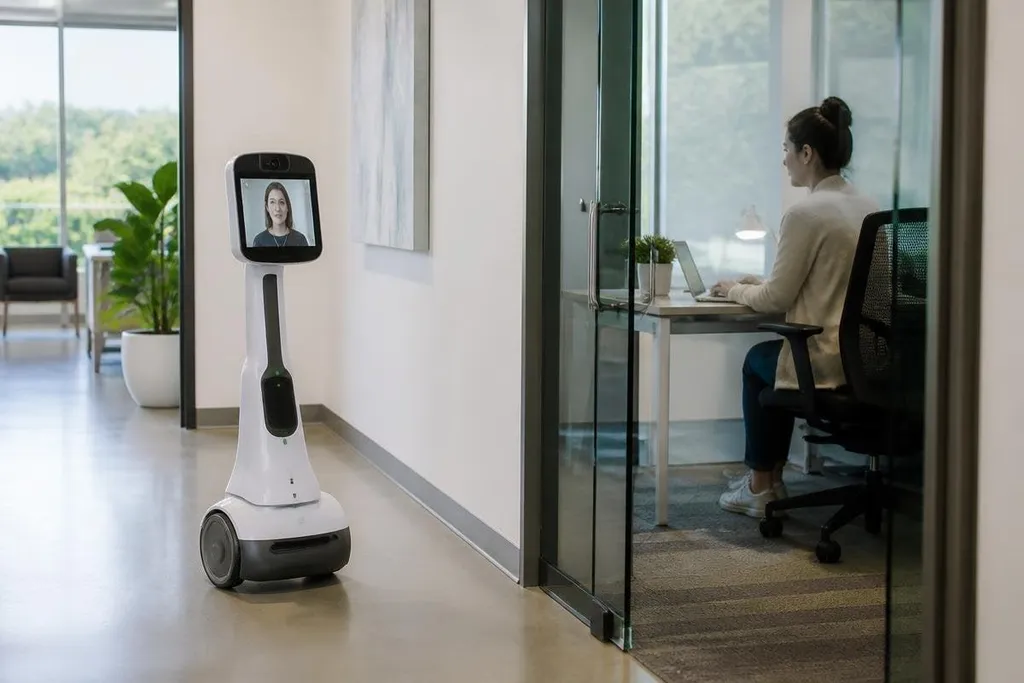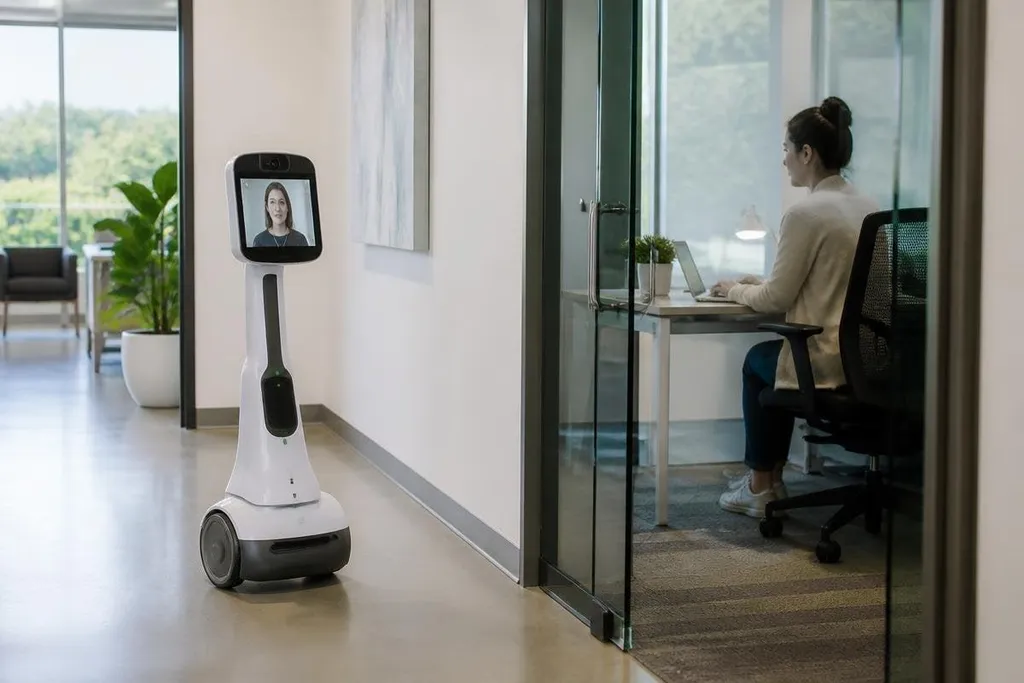
A telepresence robot gives a remote worker a moving camera, screen, microphone, and speaker in a shared space. Future models will earn their place through smoother handoffs between remote control and onboard software.
A video call becomes useful only when the robot can move safely and keep the conversation clear.
- Remote control still matters for unusual tasks and tight spaces.
- Cameras, microphones, and screen height shape the quality of a meeting.
- Safe movement needs clear limits, visible status, and a person who can stop the robot.
The machine is a moving meeting point
A fixed video call keeps the remote person in one place. It lets them choose where to look, approach a group, and leave when the meeting ends. Wheels provide movement, while cameras send the remote view and a screen shows the person on the other side.
That movement changes the work. A remote engineer may need to inspect a production line, speak with a technician, or join a small meeting without asking someone nearby to carry a tablet around. The robot has to keep its camera steady and its audio clear while it moves, or the extra hardware adds little.
Screen height also affects the exchange. A low screen can make a remote worker appear to be looking up at everyone in the room. A camera mounted too low can miss faces across a table. These are physical design choices, yet they shape how much attention people give the remote person.
Control should change with the task
Remote driving works well when a person knows the destination and can see the route. It becomes harder near doorways, chairs, cables, and people moving in different directions. The remote operator may see the path, but they don't feel the robot's distance from an object.
The useful design is shared control. Software can limit speed near people, stop the base when a sensor sees an obstacle, and keep the robot inside a marked area. The remote worker still chooses where to go, while the robot handles the last part of a safe stop.
That split needs clear signals. A remote operator should see battery level, connection status, current speed, and the reason for a stop. People nearby should also know when the camera and microphone are active. A small light or screen message can answer that question before anyone has to ask.
The hard part is the handoff
The robot may start in remote control, lose its connection, and then need to remain safe without help. It may also need a local person to move it away from a blocked doorway or place it on charge. Those moments decide whether the system fits daily work.
A good handoff has three parts: the robot keeps its position, the remote user sees what happened, and a local person can take control without a long setup. If any part fails, a short meeting can turn into a search for the robot's power switch.
Industry readers can use telepresence robot reporting to compare remote-operation claims with the failure cases that matter, such as a dropped network or blocked route. The next step is asking what buyers should require before a trial.
What buyers should ask for
Product pages often focus on the camera and screen. A buyer planning remote work in a school, office, hospital, or factory needs details about the whole operating cycle instead.
Use this check before a purchase:
- Map the route: test door widths, lifts, floor changes, and places where people gather.
- Check the handoff: confirm how a local person stops, moves, and restarts the robot.
- Test the link: measure what happens after a lost connection and how quickly control returns.
- Watch the audio: check speech in a busy room, not only in a quiet demonstration.
- Set privacy rules: define who can start the camera, where recording is stored, and how people are notified.
- Price the routine: include charging, repairs, software access, training, and local support.
A robot that passes these checks may reduce the need for someone to carry a mobile screen between rooms. A robot that fails them becomes another device for staff to manage.
The next test is ordinary work
I’d buy a telepresence robot only after seeing it handle a full work session with a blocked route, a weak connection, and a tired operator.
That test says more than a polished demonstration. Future models will be judged in the small moments: entering a room, joining a group, stopping safely, and handing control to someone standing beside it.